


Article: Heritage Is The Handover
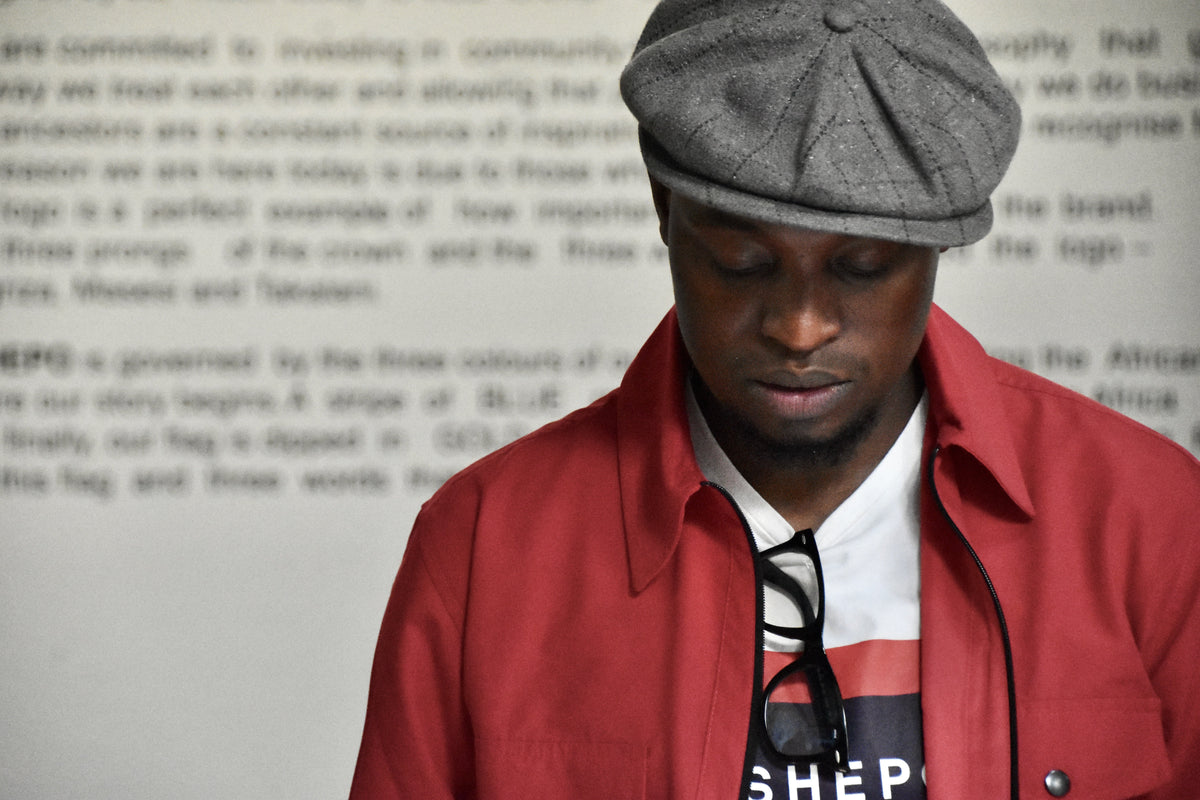
Heritage Is The Handover
We were not handed a fashion house. We are building one strong enough to pass on.

Luxury often introduces itself by age. A date beneath a name. A founder from another century. An archive, an old workshop, a craft passed through one family. Time becomes proof.
For a boy raised in Tsakane, that version of heritage could have felt like a locked door. There was no fashion dynasty waiting for Tshepo Mohlala, no inherited atelier and no archive to reopen. What he inherited was less visible, but more alive: a name that means hope; the stories of his grandmother, Magriza; the resilience of his mother, Masesi; the style and denim of his aunt, Takalani; and the practice of dressing with dignity. Before TSHEPO was a label, its values were already being handed down.
That is where our understanding of heritage begins.
Heritage is a living thing
Heritage Month recognises more than monuments, objects and places. It also makes room for what cannot be placed behind glass: language, memory, knowledge, creative expression and the skills carried by people. Living heritage survives because each generation receives it, interprets it and gives it another life.
At TSHEPO, the past is not a costume we put on in September. It lives in how we work. It is present in the stories we tell, in the care taken over a seam, in the welcome offered when someone enters our home and in the belief that clothing can help a person recognise their worth.
This matters because "African heritage" can too easily become a mood board. A pattern is lifted, a symbol is enlarged and a continent of many histories is reduced to a look. Ours must be more specific, more honest and more accountable. It comes from a Christian home in Tsakane, from Bapedi colour and symbolism, from Johannesburg's restlessness, from township ingenuity and from the women whose lessons became the foundation of the brand.
From where we stand, heritage is not simply the preservation of the past. It is the handover.
Three women, three prongs
The TSHEPO Crown makes that handover visible.
Its three prongs honour Magriza, Masesi and Takalani. From Magriza came faith, wisdom and the understanding that a story can guide a life. From Masesi came resilience and the quiet discipline of continuing. From Takalani came style, possibility and the first image of denim as something that could change how a person carried themselves.
The needle and thread at the centre of the Crown matter just as much as the prongs. They remind us that inheritance is not passive. What we receive must be worked with. Values only survive when they enter our choices, our standards and our hands.
Beside the Crown sits the TSHEPO flag. Its red returns us to African soil and the histories held there. Its blue carries denim. Its gold looks towards prosperity and the future. The flag signals that this story is deeply personal, but never private. It belongs to a larger community and a larger continent. The Crown remembers who raised us. The flag remembers who we are responsible to.

Hope before proof
TSHEPO began in 2015 with an R8,000 loan, 100 pairs of jeans and a backpack. In the early days, Tshepo sold what he had and made deliveries by bicycle. Later came the criticism. People questioned the price. Some questioned who would buy jeans carrying an African name. The dream was judged before it had been given enough time to become evidence.
So was it faith, fantasy or a delusional willingness to keep going?
Perhaps every new legacy begins as something the present cannot yet justify. Faith gives you a reason to begin. Imagination allows you to see a future for which there is no example in front of you. But neither is enough on its own. Belief did not sew the jeans, refine the pattern, train the team or open the doors. Work did.
What looked unreasonable from the outside became credible through repetition. Tshepo learnt the craft. He listened. He returned to the work after failure and depression. He protected his name, improved the product, welcomed the right people and kept showing up. The so-called delusion was disciplined.
The criticism also exposed something larger than one young business. It revealed how unfamiliar we had become with seeing an African name carry aspiration at home. When recognition later came from global publications and public figures, it did not create the value of TSHEPO. It simply made more people notice what local makers, believers and customers had already been building.
Hope is not pretending the road will be easy. It is deciding that the road is still worth taking, then taking it again tomorrow.
From one pair of hands to many
A founder can begin a story. A legacy requires other people to continue it.
TSHEPO started becoming larger than Tshepo when knowledge began moving through the Atelier. At Victoria Yards, the brand found people in the surrounding community who already knew how to sew, then invested in the specialised knowledge required to make jeans. Team members were trained in the construction of a pair from beginning to end. Those skills now belong to the people who learnt them, wherever their lives may take them.
That is heritage in practice. Not only an object handed over, but capability. Not only employment for today, but knowledge that can create tomorrow. A brand that depends on one person's hands may become famous. A house that teaches other hands has a chance to endure.
The wearer completes the handover too. Denim leaves the Atelier unfinished in the most beautiful sense. It fades where a life touches it, softens where a body moves and gathers marks that no designer can plan. The maker begins the garment, but the wearer continues it. Years later, a pair of jeans can hold a shape, a season, a journey and a person. It can become an archive you wear, then something you pass on.
Eleven years is not a century
We are not interested in borrowing age we have not earned. Eleven years is eleven years.
Longevity matters. So do a consistent track record, clear values, meaningful symbols and the belief that a brand's history must be protected. Time cannot be rushed, but stewardship can begin now. A company can be old and have very little worth carrying forward. A young house can already be making deliberate choices about what deserves to endure.
The question is not whether TSHEPO is old enough to claim the past. The question is whether we are building something worthy of a future.
That responsibility asks more of us than nostalgia. We must preserve the truth of the beginning without turning struggle into mythology. We must keep the early photographs, patterns, stories and first garments. We must continue teaching the craft. We must protect the meaning of the Crown and flag from becoming decoration. We must grow without sanding away the specificity that gave the brand its soul. Most importantly, we must build standards and a culture strong enough to lve beyond the person whose name is above the door.
What we hand over
The handover will not happen in one grand ceremony.

It happens when an experienced maker shows a younger one how to hold a difficult seam. When a parent gives a well-worn pair of jeans to a child. When a customer carries Johannesburg into another part of the world. When someone from Tsakane, or any place they have been told is too small for a big dream, sees the name TSHEPO above a store and understands that their own name does not need to be translated before it can matter.
Legacy is not only what remains after us. It is what becomes possible because we were here: a skill, a livelihood, a standard, a memory, a symbol, a sense of worth and a wider field of imagination.
Living heritage also gives the next generation permission to change what it receives. The task is not to keep TSHEPO frozen in 2015. It is to protect the intention while allowing the expression to evolve. The future should be able to recognise the hand that began the work without being trapped inside it.
Perhaps that is what legacy means from where we stand. Not claiming that we have always been here. Not measuring our worth by the age of a building or the length of an archive. It is having the courage to make a beginning worthy of continuation.
We were not handed a fashion house. We are building one strong enough to hand over.


Leave a comment
This site is protected by hCaptcha and the hCaptcha Privacy Policy and Terms of Service apply.